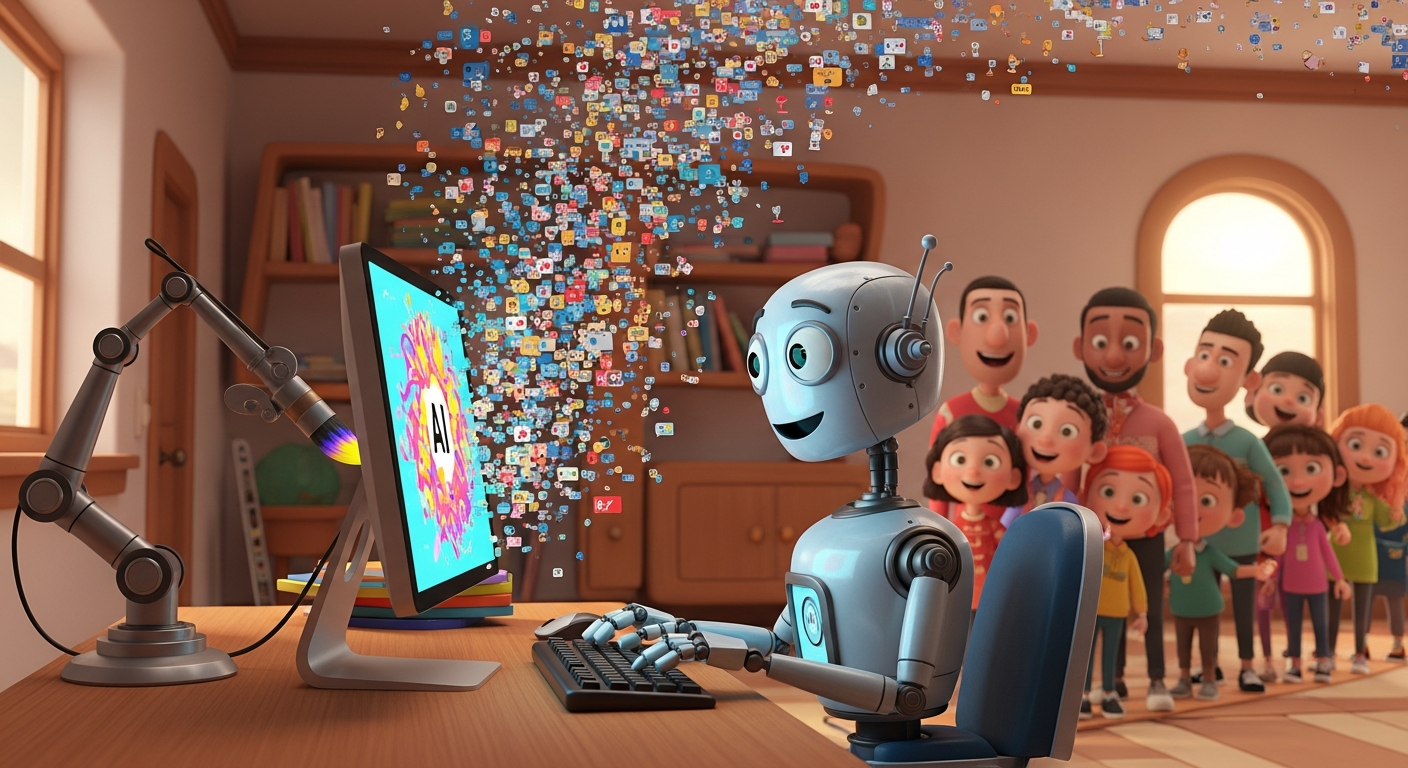
On November 30, 2022, OpenAI released a chatbot that anyone could talk to. Five days later, one million people were using it. The world would never be the same.
The Launch That Broke the Internet
Nobody at OpenAI expected what happened next.
On November 30, 2022, the company quietly released a free tool called ChatGPT. It was simple — you typed a question, and it answered. You asked it to write a poem, and it wrote one. You asked it to explain black holes like you’re five years old, and it did.
The OpenAI team thought maybe a few thousand people would try it. After all, it was just a research experiment. They didn’t even have a big marketing plan.
But then something incredible happened. People started sharing it with their friends. Teachers showed it to their students. Parents showed it to their kids. Students showed it to their parents. Within five days, one million people had signed up. Within two months, 100 million people were using it — making ChatGPT the fastest-growing app in the history of the internet.
Why? Because for the first time ever, anyone could have a conversation with artificial intelligence. You didn’t need to be a scientist. You didn’t need to know how to code. You just had to type.
What Made ChatGPT So Special?
Remember GPT-3 from Part 1? It was incredibly smart, but hard to use. Only researchers and big companies could access it. Talking to it felt like operating a complicated machine.
ChatGPT was different. OpenAI’s team had done something clever: they trained the AI to have conversations. Not just answer questions — actually chat, like a helpful friend.
Here’s how they did it. They hired hundreds of people to have conversations with the AI. Every time the AI gave a good answer, the humans gave it a thumbs up. Every time it gave a bad, confusing, or wrong answer, they gave it a thumbs down and showed it a better response. Over thousands and thousands of conversations, the AI learned how to be helpful, clear, and friendly.
Think of it like training a puppy. You don’t just give a puppy a book about being a good dog. You reward it when it sits, and you gently correct it when it jumps on the couch. Eventually, the puppy learns. ChatGPT learned the same way — through practice and feedback from real people.
The result was an AI that could:
- Write stories, poems, and songs
- Explain complicated topics in simple words
- Help adults write emails, plan trips, and brainstorm ideas
- Even write computer code
The Day Everyone Had a Superpower
Imagine waking up one morning and discovering you had a superpower. Not flying or invisibility — but the ability to instantly understand any topic, write in any style, and get help with almost any task.
That’s what ChatGPT felt like to millions of people.
A student in Brazil used it to understand math problems her teacher explained too quickly. A small business owner in Japan used it to translate his website into English. A grandmother in France used it to write a bedtime story for her grandchild — starring the grandchild as the hero.
A 12-year-old boy used ChatGPT to help him build his first website. He didn’t know how to code, but ChatGPT walked him through it step by step. “It felt like having a really patient tutor,” he said.
All around the world, people were discovering that AI wasn’t just for scientists and tech companies anymore. It was for everyone.
Not Perfect — And That’s Important
But ChatGPT wasn’t perfect. Sometimes it made things up. It would write an answer that sounded completely confident and correct — but was actually wrong. Researchers called these “hallucinations.”
For example, if you asked ChatGPT about a very specific topic, it might invent a fact that didn’t exist — and present it as truth. It was like a student who doesn’t know the answer to a test question but writes something anyway, hoping the teacher won’t notice.
OpenAI was honest about this. Sam Altman himself said, “ChatGPT is incredibly limited. It’s a mistake to rely on it for anything important right now.”
This was actually a very important lesson: powerful tools need to be used wisely. A calculator is amazing, but you still need to understand math. ChatGPT is amazing, but you still need to think for yourself.
The OpenAI team kept working to make it better — fixing mistakes, adding safety features, and teaching the AI to say “I’m not sure” when it didn’t know something. Every day, ChatGPT got a little smarter and a little more honest.
GPT-4: The Next Leap
In March 2023, just four months after ChatGPT launched, OpenAI released GPT-4 — the most powerful version yet.
GPT-4 could do things that seemed almost magical. It could look at a photo and describe what was in it. It could solve logic puzzles. It could even pass difficult exams that most adult professionals study months for.
OpenAI also created a version called GPT-4o (the “o” stands for “omni,” meaning “everything”). This version could understand text, images, and voice all at once — like having a conversation with someone who can see what you see and hear what you hear.
The dream from that dinner back in 2015 was becoming real. AI wasn’t just powerful anymore. It was becoming helpful, safe, and available to everyone.
Did You Know?
- ChatGPT reached 100 million users faster than any app in history — in just 2 months!
- OpenAI hired real humans to teach ChatGPT how to be polite, helpful, and honest. These people had thousands of conversations with the AI.
- Large language models like GPT don’t “know answers” the way humans do. Instead, they predict the next most likely word based on the massive amount of text they’ve learned from.
Think About It!
- If you could set three rules for AI, what would they be?
- ChatGPT sometimes makes mistakes but sounds very confident. How can you tell if information is true or not?
- Do you think AI will make people smarter, or lazier? Or could it be both?