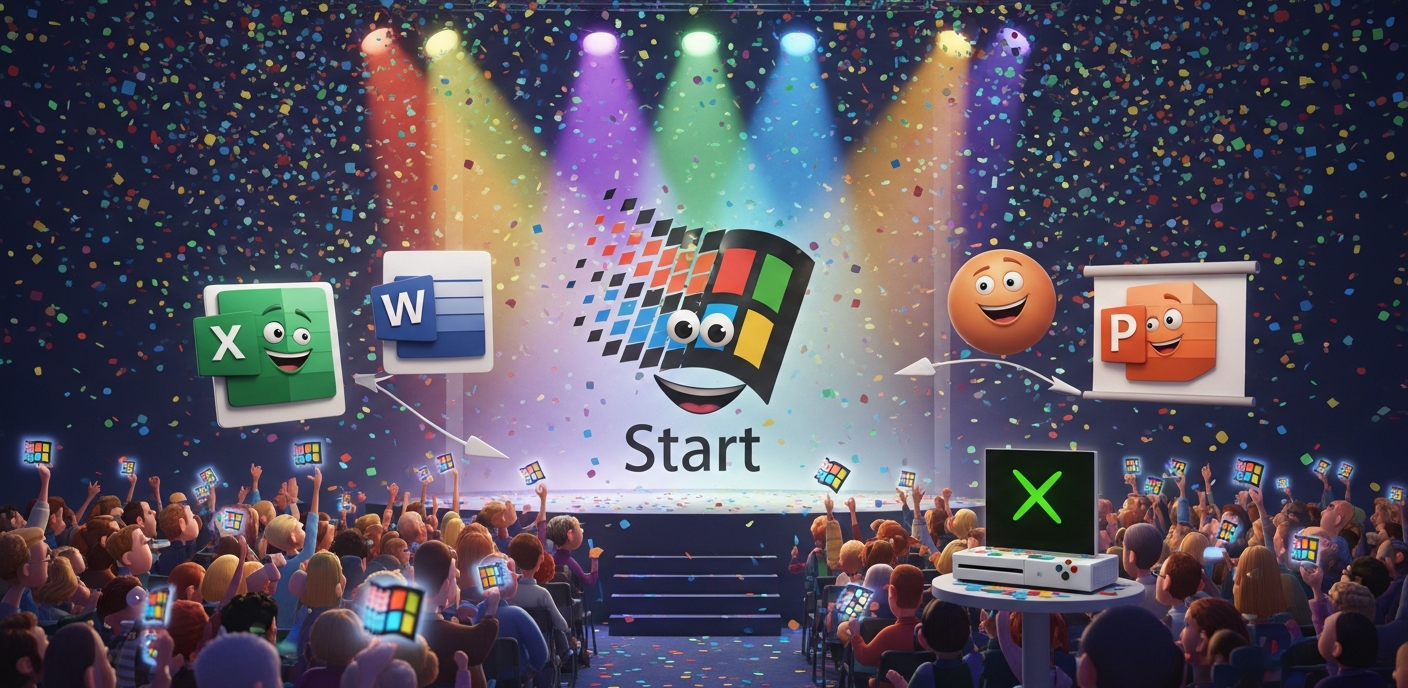
What if using a computer was as easy as pointing at what you want and clicking? One idea turned Microsoft from successful into unstoppable.
The Problem with MS-DOS
By the mid-1980s, MS-DOS was everywhere. Almost every personal computer in the world ran on it. Microsoft was growing fast and making lots of money.
But MS-DOS had a big problem: it was ugly and confusing. To do anything, you had to type commands — long strings of letters and symbols that you had to memorize. Want to see what files you have? Type DIR. Want to copy a file? You had to type a whole line of code-like stuff. One wrong letter and the computer just ignored you.
Most regular people looked at that blinking cursor on a black screen and thought: this is not for me.
Meanwhile, Apple had released the Macintosh in 1984 — a computer with a friendly graphical interface. You could see little pictures called icons on the screen and click them with a mouse. It was beautiful. But the Macintosh was expensive. Most families and businesses couldn’t afford one.
Bill Gates saw the opportunity. What if he could bring that same easy, visual experience to the millions of cheaper computers already running MS-DOS?
Windows Arrives (and Almost Fails)
On November 20, 1985, Microsoft released Windows 1.0. It was a program that ran on top of MS-DOS and gave you a graphical interface — windows, menus, buttons, and a mouse pointer.
The first version was terrible. It was slow, buggy, and kind of ugly. Critics made fun of it. Some called it a bad copy of the Macintosh. Apple even sued Microsoft, claiming Windows stole their ideas.
But Bill Gates didn’t panic. He believed that the graphical interface was the future, and he was willing to keep failing until he got it right. Windows 2.0 was a little better. Windows 3.0, released in 1990, finally became a real hit — 10 million copies in two years. People were starting to believe.
But the real game-changer? That was still coming.
Windows 95: People Camped Outside Stores for Software
On August 24, 1995, something happened that had never happened before for a piece of software: people lined up outside stores at midnight — just to buy a computer program.
Windows 95 was a huge event. Microsoft put ads everywhere — on TV, in newspapers, and even the Empire State Building in New York was lit up in Microsoft’s colors. The whole world was talking about it.
And the product lived up to the hype. Windows 95 had the Start menu — click one button and find everything on your computer. It made PCs feel friendly and modern. For the first time, regular people could sit down at a computer and actually figure out how to use it without reading a manual.
Windows 95 sold 7 million copies in its first five weeks. Within a few years, Windows was running on over 90% of all personal computers on Earth. Microsoft had won.
Office: When Product Names Become Verbs
Microsoft built something on top of Windows that became equally powerful: Microsoft Office.
Your teacher shows slides in class? That’s PowerPoint. Your parents type up a report on the computer? That’s Word. They use a grid of little boxes to keep track of things? That’s Excel. Before Office, these tools were made by different companies and worked in totally different ways. Microsoft’s smart move was putting them all together, so they looked the same and worked the same.
How popular did Office get? Its names became everyday words. Adults say things like “send me a Word doc” or “open an Excel” — as naturally as people say “Google it.”
MSN Messenger: The Sound of Friendship
In the late 1990s, the internet was exploding — and Microsoft jumped in. They built Internet Explorer and bundled it free with Windows. Since Windows was on nearly every computer, Internet Explorer quickly became the most popular web browser.
But for kids and teenagers, the most exciting thing Microsoft ever made wasn’t a browser. It was MSN Messenger.
Launched in 1999, MSN Messenger was an instant messaging app — a way to chat with friends by typing messages back and forth on your computer. Every day after school, millions of kids around the world would rush home, turn on the computer, and wait for that sound: the famous ding that meant a friend had come online.
At its most popular, over 330 million people around the world used MSN Messenger.
Xbox: “You’re Crazy”
Then Microsoft did something nobody expected. The world’s biggest software company decided to make… a gaming console.
When Bill Gates announced the Xbox in 2001, people thought Microsoft had lost its mind. Making game consoles was Sony’s and Nintendo’s territory. What did a company that made Office and Windows know about video games?
Microsoft answered that question with a space shooter game called Halo — it launched with the very first Xbox. In Halo, you play as a super soldier in cool armor, trying to save the entire universe. The game was so much fun that some people bought an Xbox just to play it. Friends would crowd around one TV, four players battling each other, playing until they lost track of time. Halo became one of the most famous video games ever made.
The first Xbox didn’t make money — Microsoft actually lost billions. But they kept going. The Xbox 360 became a massive hit. Xbox Live let players compete with people around the world over the internet. Microsoft had proven that a software company could fight its way into gaming — and win.
On Top of the World — Then the Ground Shifts
By the year 2000, Microsoft was the most valuable company on the planet. Bill Gates was the richest person in the world. The kid who couldn’t stop coding in his school’s computer room had built a company that touched the life of nearly every person who used a computer.
But far away in California, a man named Steve Jobs was getting ready to show the world a small device. It would change everything. And Microsoft — the company that seemed impossible to beat — had no idea what was coming next.
Did You Know?
- Bill Gates became the world’s youngest self-made billionaire in 1987 at age 31.
- MSN Messenger’s famous “nudge” feature would shake your friend’s entire chat window.
- The first Xbox weighed 3.9 kilograms — so heavy that gamers joked it could double as a doorstop.
Think About It!
- Everyone told Microsoft they were crazy to make a gaming console. But they tried anyway and succeeded. Have you ever tried something that other people said you couldn’t do?
- Windows made computers easy enough for everyone to use. Can you think of something today that’s still too complicated, and could use a “Windows moment” to make it simple?
- Microsoft didn’t succeed every time at first. Do you think it’s worth keeping trying after failing a few times? Why?