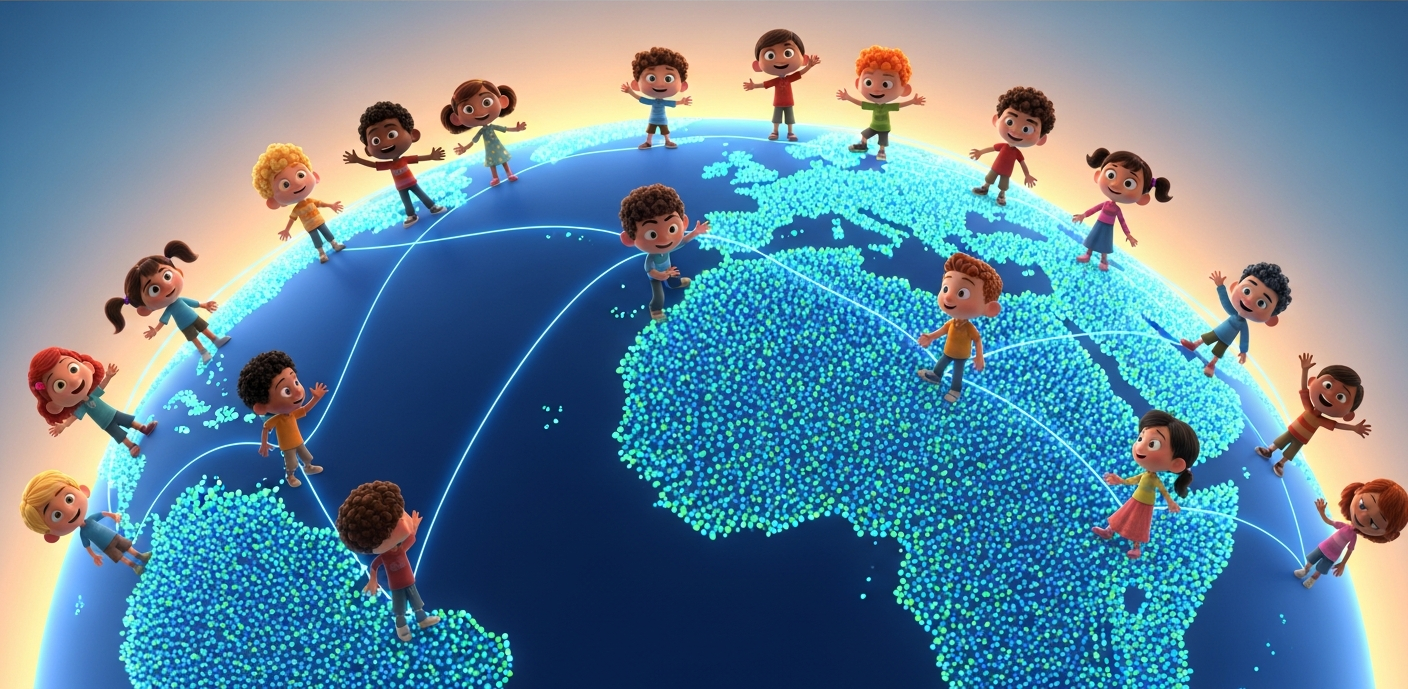
Facebook connected your college friends. Then it connected the whole world — and changed how we share, shop, and even think.
When Phones Became Everything
Back in 2010, people used Facebook on their computers. But iPhones and Android phones were getting more and more popular, and people started spending more time on their phones. Here was the problem — Facebook’s website was really hard to use on a phone. The text was tiny. The buttons were impossible to tap. Photos took forever to load.
Mark Zuckerberg made a bold decision. He told everyone at the company: starting today, phones come first, computers come second.
It was like a bakery that had always had a big shop on a busy street. Suddenly the owner says: “We’re closing the big shop and switching to a food truck to go find our customers!” Everyone was shocked.
But Mark’s bet paid off. Within a few years, more people were using Facebook on their phones than on computers. The app became faster, smoother, and easier to use than ever before. A company that started on a laptop in a dorm room was now living in billions of people’s pockets.
Instagram: Telling Stories with Photos
Mark didn’t just make Facebook better. He noticed something: more and more people wanted to share their lives through photos.
In 2012, there was a tiny app called Instagram. It let you take a photo and add beautiful filters to make ordinary pictures look like art. Back then, Instagram had just 13 employees — fewer than the kids in your class.
Facebook paid $1 billion to buy it. A lot of people thought that was crazy. A 13-person company, worth a billion dollars?
The result? Instagram grew from 30 million users to over 2 billion. It became the place where everyone shares travel photos, food pics, and selfies. Those beautiful food photos and travel pictures you see online? A lot of them are on Instagram.
Two years later in 2014, Facebook bought WhatsApp. WhatsApp is a free messaging app — you can send texts, photos, and voice messages without paying a cent. In many countries, people don’t make phone calls or send text messages anymore. They just use WhatsApp. In India and Brazil, asking someone “What’s your number?” really means “What’s your WhatsApp?”
Bringing the Internet to People Without Computers
Facebook wasn’t just popular in wealthy countries. In many places where computers were rare and internet was slow, Facebook became everyone’s “gateway to the internet.”
Imagine this: you live in a tiny, remote village. Your family doesn’t have a computer. Your phone is the most basic kind. The internet is so slow that almost no website will load. But Facebook made a special version that uses very little data, so even these simple phones can run it.
So in many parts of Africa and Southeast Asia, Facebook isn’t just for chatting. Shop owners use Facebook to sell things without paying to build a website. Teachers use Facebook Groups to share lessons. Families living in different countries stay in touch through Facebook posts and video calls.
By 2017, 2 billion people were using Facebook every month. That’s one out of every four people on Earth.
A New Name, A New Dream
One day in 2021, Mark Zuckerberg stood up and told the world something that surprised everyone: the company behind Facebook was changing its name. The new name was Meta.
Why change the name? Because Mark had a bigger dream. He believed the future of the internet wasn’t just looking at text and photos on a screen. He imagined a day when you could put on a lightweight headset and “step inside” the internet. You could meet friends in a virtual world, play together, and learn together. This idea is called the metaverse.
Meta had actually been preparing for years. In 2014, they bought a company called Oculus that makes Virtual Reality (VR) headsets. Now they renamed the whole company to show they were serious.
The apps you use every day — Facebook, Instagram, WhatsApp — all stayed exactly the same. But the company behind them had a bigger goal.
Will the metaverse actually succeed? Nobody knows yet. But from a dorm room directory to connecting billions of people, this journey is already one of the most incredible stories in tech. And it all started because a college kid thought it would be nice to know who his classmates were.
Did You Know?
- To bring the internet to places with slow connections, Facebook built a solar-powered drone called Aquila. Its wingspan was as wide as a Boeing 737, it could stay in the air for months, and it beamed internet signals down to the ground from the sky.
- WhatsApp was created by Jan Koum, who grew up in a tiny village in Ukraine with no hot water. He moved to America at 16 and eventually built an app used by a quarter of the world’s population.
- Mark Zuckerberg speaks Mandarin Chinese. He learned it so he could chat with his wife Priscilla’s family.
Think About It!
- Facebook, Instagram, and WhatsApp connect billions of people. What do you think is the most important way technology connects people?
- Mark Zuckerberg bet the company’s future on the metaverse by renaming it Meta. If you could create any kind of virtual world, what would it be like?
- Small businesses around the world use Facebook to reach customers. If you could start a small business and promote it on social media, what would you sell?